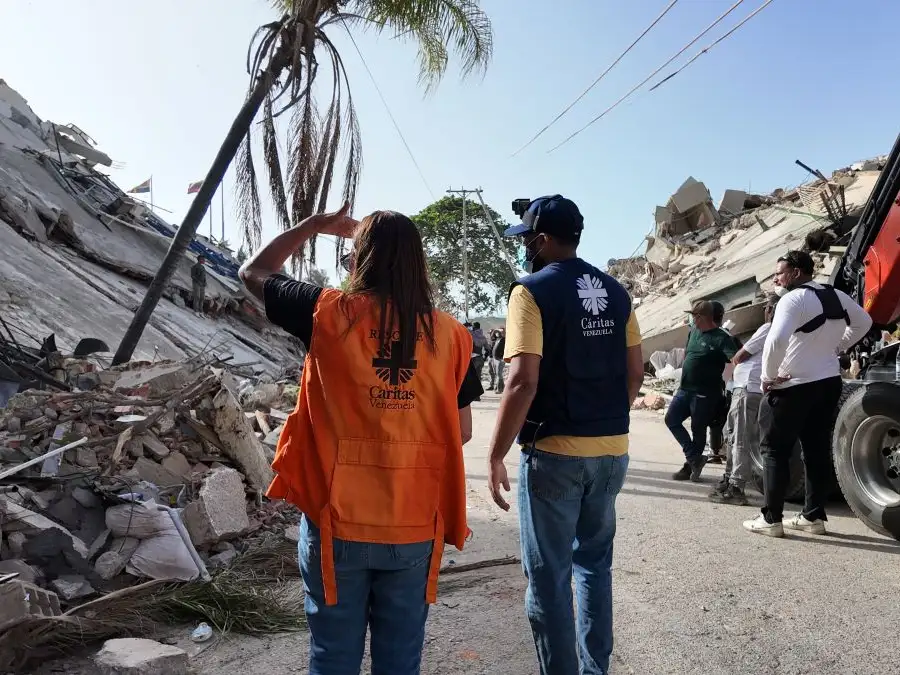
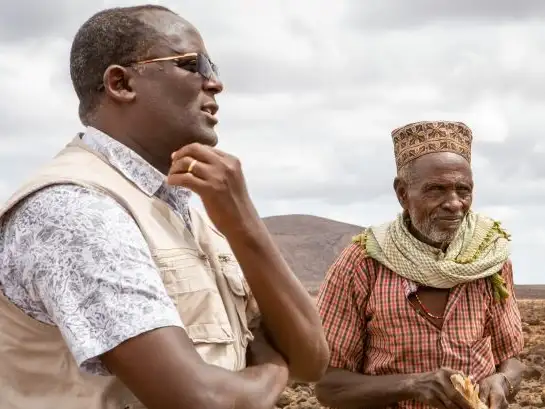
In many parts of the DRC, the Catholic Church is one of the most trusted providers of healthcare and operates an estimated 45% of the country’s health facilities. Priests, nuns and other faith leaders hold key positions of trust in their communities, and are vital for helping disseminate information about how to stop the spread of the disease.
In a letter for the Archbishops and Bishop of England and Wales, the National Bishops’ Conference of the Congo said:
“In the Democratic Republic of the Congo, the Catholic Church is not only a spiritual guide; it is also one of the country’s main healthcare providers, through a vast network of hospitals, health centres and clinics on which millions of people depend every day. Because our facilities are already established in remote and affected areas, our medical staff are directly on the front line for detecting cases and caring for the sick.
"In this difficult context, we are pleased to note that our friends at CAFOD are already supporting their partners on the ground, playing a vital role as a bridge between major international humanitarian aid mechanisms and our local religious communities. This supportive role is now more important than ever. This new outbreak is not merely a health emergency; it is also a test of the international community’s ability to learn from the past by recognising and supporting church institutions already working on the front line.
"At this dark hour for our country, we humbly ask for the prayers, solidarity and support of the Catholic community in England and Wales.”
Because of their traditional roles as primary caregivers and frontline community health workers, women face the highest risk of exposure to the virus. Yet, because of these very roles, they also hold the keys to community trust. That’s why our partners are working to support women to protect themselves and take a lead in efforts to successfully contain the virus.
“When the first Ebola cases were reported our community was very worried,” says Emmanuel. Living in Ituri province, close to the heart of the outbreak, news of the disease very quickly reached his village quickly. But with very little official information available, fear took hold. No one was sure how the disease spread, or how to protect themselves from it. And rumours began to fly that no one who was infected could survive.
“Many people were afraid and did not know how to protect themselves – it was a sentiment of being powerless and very discouraged. Rumours spread quickly, and several families were afraid to visit health facilities.”